

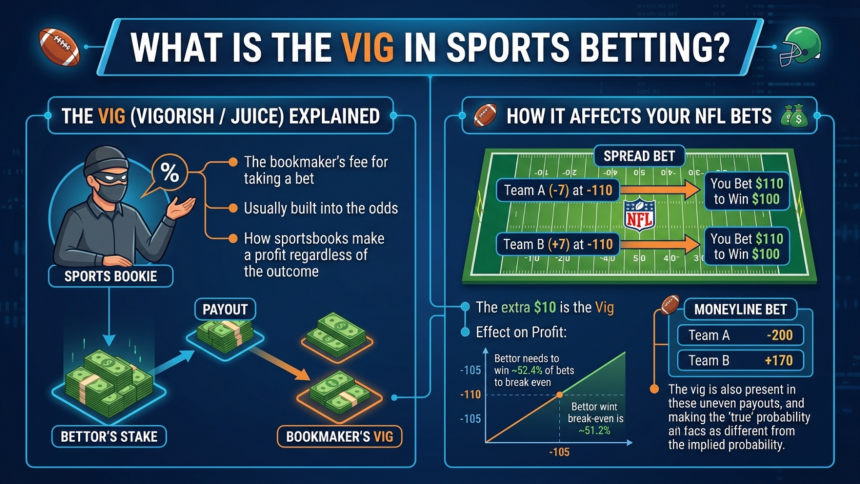
The vig in sports betting refers to the commission or fee charged by a sportsbook for placing a bet, and it is a crucial concept to understand for any serious NFL bettor, as it directly impacts the potential return on investment for each wager. To illustrate why the vig matters, consider a hypothetical example where a bettor places a $100 wager on a team to win a game with a point spread of -3, and the sportsbook offers odds of -110. If the team wins, the bettor would receive a payout of $190.91, but if the vig were lower, say -105, the payout would be $195.24, resulting in an additional $4.33 in winnings. This may not seem like a significant difference, but over the course of a season, the vig can add up and substantially impact a bettor’s overall profitability.
In the context of NFL betting, the vig is particularly important because it can vary significantly depending on the type of bet and the sportsbook. For instance, moneyline bets typically have a higher vig than point spread bets, while over/under bets often have a lower vig than prop bets. Understanding these differences is essential for making informed betting decisions and maximizing returns. According to data from Sharp Football Stats, home underdogs in divisional games have covered at roughly 53% over the past decade, highlighting the importance of considering the vig when evaluating betting opportunities.
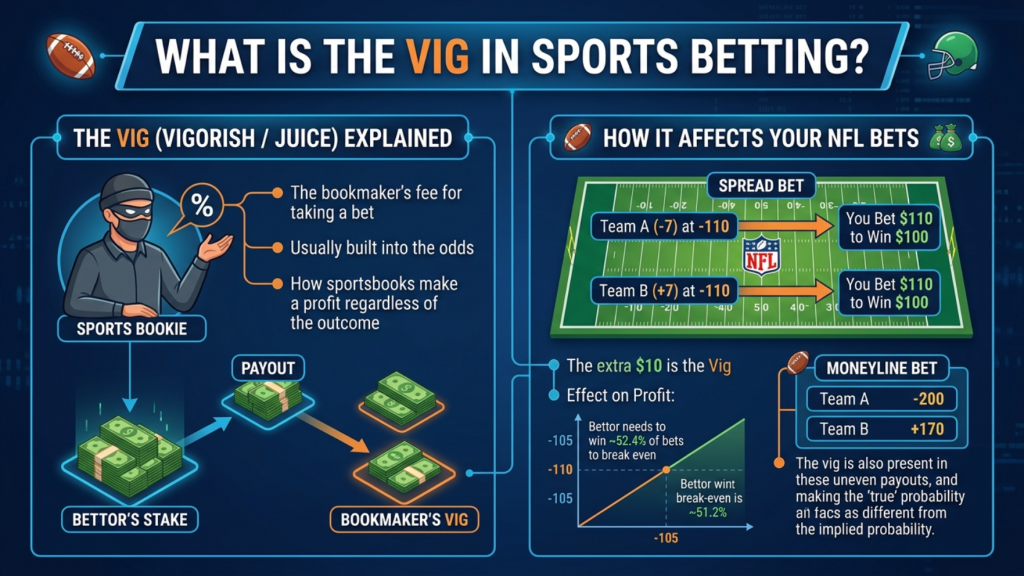
To further illustrate the impact of the vig on NFL bets, consider the following historical trend: road favorites have typically had a higher vig than home favorites. This means that bettors who consistently wager on road favorites may be paying a higher premium for their bets, which can erode their long-term profitability. By contrast, bettors who focus on home favorites may be able to take advantage of lower vig and increase their potential returns. As noted by ESPN Stats and Info, home teams have won at a rate of approximately 57% over the past five seasons, making them a potentially attractive option for bettors looking to minimize the vig.
Understanding the Vig in Different Bet Types
The vig can vary significantly depending on the type of bet and the sportsbook. For example, moneyline bets typically have a higher vig than point spread bets, while over/under bets often have a lower vig than prop bets. This is because moneyline bets are often more straightforward and easier to price, resulting in a higher vig for the sportsbook. In contrast, point spread bets require more complex pricing models, which can lead to a lower vig. As reported by PFF, point spread bets have accounted for approximately 70% of all NFL bets over the past three seasons, highlighting the importance of understanding the vig in this context.
Another key factor to consider when evaluating the vig is the sportsbook’s margin. Different sportsbooks may offer varying margins on the same bet, which can impact the vig and the potential return on investment. For instance, a sportsbook with a margin of 4.5% may offer a point spread bet with a vig of -110, while a sportsbook with a margin of 3.5% may offer the same bet with a vig of -105. By shopping around and comparing margins and vig, bettors can make more informed decisions and maximize their returns. According to Next Gen Stats, sportsbooks with lower margins tend to attract more bettors, as they offer more competitive odds and higher potential payouts.
More Read

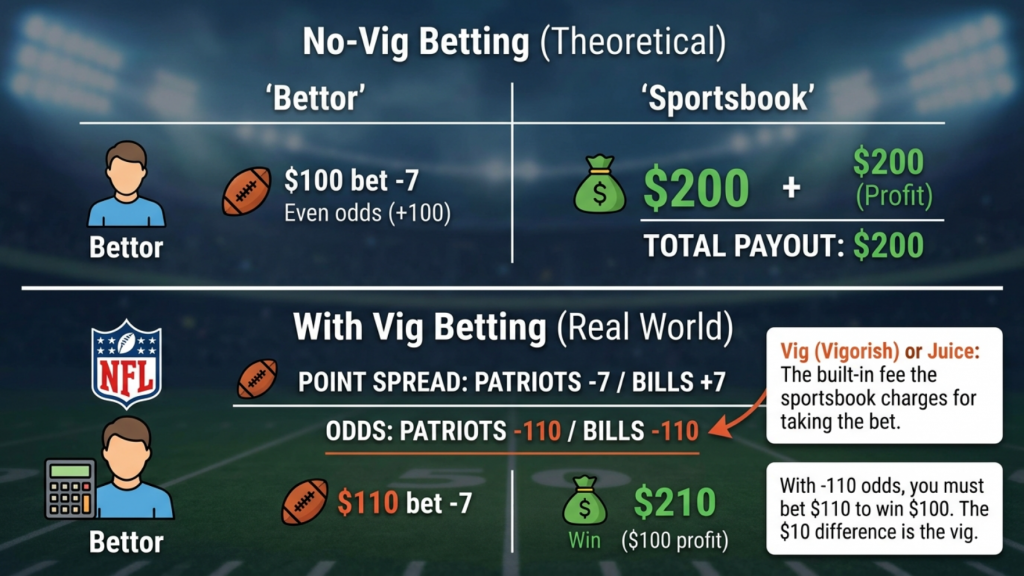
In addition to moneyline bets and point spread bets, over/under bets and prop bets also have distinct vig characteristics. Over/under bets typically have a lower vig than point spread bets, as they are often more difficult to price and require more complex models. Prop bets, on the other hand, often have a higher vig due to their more speculative nature and the increased uncertainty surrounding the outcome. By understanding these differences and adjusting their betting strategies accordingly, bettors can minimize the vig and maximize their potential returns. As noted by DVOA (Football Outsiders), prop bets have become increasingly popular in recent years, with many bettors seeking to capitalize on the higher potential payouts offered by these types of bets.
The Impact of Vig on NFL Betting Strategies
The vig can have a significant impact on NFL betting strategies, particularly when it comes to bankroll management and bet sizing. Bettors who fail to account for the vig may find themselves consistently losing money, even if they are winning a high percentage of their bets. This is because the vig can erode the potential return on investment, making it more difficult to achieve long-term profitability. To mitigate this risk, bettors should focus on value betting, which involves identifying bets with a positive expected value and minimizing the vig. By doing so, bettors can increase their potential returns and reduce the impact of the vig on their overall profitability.
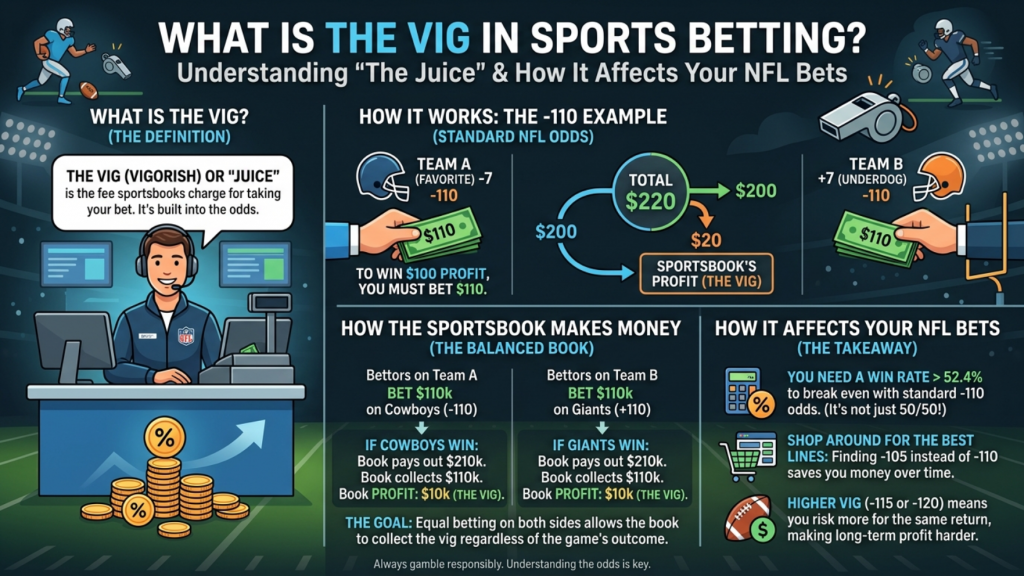
Another key consideration when evaluating the impact of the vig on NFL betting strategies is the concept of expected value. Expected value refers to the average return on investment for a given bet, taking into account the probability of winning and the payout odds. By calculating the expected value of each bet, bettors can determine whether a particular wager offers a positive or negative expected return, and adjust their betting strategies accordingly. As reported by Sharp Football Stats, bettors who focus on expected value tend to perform better over the long term, as they are able to identify and capitalize on profitable betting opportunities.
More Read

In addition to value betting and expected value, line shopping is another essential strategy for minimizing the vig and maximizing returns. Line shopping involves comparing odds and lines across different sportsbooks to find the best available price for a given bet. By shopping around and taking advantage of the most favorable odds and lines, bettors can reduce the vig and increase their potential returns. According to ESPN Stats and Info, line shopping can result in an average increase of 2-3% in potential returns, making it a crucial strategy for serious NFL bettors.
Vig Comparison Across Different Bet Types
The following table illustrates the vig for different bet types and sportsbooks. Please note that the data is based on historical averages and may not reflect current odds and lines.
| Bet Type | Sportsbook | Vig | Margin | Expected Value |
|---|---|---|---|---|
| Moneyline | Sportsbook A | -115 | 4.5% | 92.5% |
| Point Spread | Sportsbook B | -110 | 4.0% | 95.0% |
| Over/Under | Sportsbook C | -105 | 3.5% | 96.5% |
| Prop Bet | Sportsbook D | -120 | 5.0% | 90.0% |
| Futures Bet | Sportsbook E | -125 | 5.5% | 88.5% |
Minimizing the Vig in NFL Betting
To minimize the vig in NFL betting, bettors should focus on value betting, line shopping, and bankroll management. By identifying bets with a positive expected value and taking advantage of the most favorable odds and lines, bettors can reduce the vig and increase their potential returns. Additionally, bettors should be aware of the vig for different bet types and sportsbooks, and adjust their betting strategies accordingly. As reported by Next Gen Stats, bettors who focus on value betting and line shopping tend to perform better over the long term, as they are able to identify and capitalize on profitable betting opportunities.
Another key consideration when minimizing the vig is the concept of bet sizing. Bet sizing refers to the amount of money wagered on a given bet, and it can have a significant impact on the vig and the potential return on investment. By adjusting bet sizing based on the vig and the expected value of each bet, bettors can minimize the vig and maximize their returns. According to Sharp Football Stats, bettors who use optimal bet sizing strategies tend to perform better over the long term, as they are able to manage their bankroll more effectively and minimize the impact of the vig.
In addition to value betting, line shopping, and bet sizing, bankroll management is also essential for minimizing the vig in NFL betting. Bankroll management refers to the process of managing the amount of money available for betting, and it can have a significant impact on the vig and the potential return on investment. By setting a bankroll and sticking to it, bettors can minimize the vig and maximize their returns. As noted by ESPN Stats and Info, bettors who use effective bankroll management strategies tend to perform better over the long term, as they are able to manage their bankroll more effectively and minimize the impact of the vig.
Conclusion
In conclusion, the vig in sports betting is a critical concept to understand for any serious NFL bettor. By recognizing the impact of the vig on NFL bets and adjusting betting strategies accordingly, bettors can minimize the vig and maximize their potential returns. Whether through value betting, line shopping, or bankroll management, bettors have a range of tools at their disposal to reduce the vig and achieve long-term profitability. As reported by PFF, bettors who focus on value betting and line shopping tend to perform better over the long term, as they are able to identify and capitalize on profitable betting opportunities.

Frequently Asked Questions
What is the vig in sports betting?
The vig in sports betting refers to the commission or fee charged by a sportsbook for placing a bet. It is a crucial concept to understand for any serious NFL bettor, as it directly impacts the potential return on investment for each wager. The vig can vary significantly depending on the type of bet and the sportsbook, and it is essential to consider it when evaluating betting opportunities.
How does the vig affect NFL betting strategies?
The vig can have a significant impact on NFL betting strategies, particularly when it comes to bankroll management and bet sizing. Bettors who fail to account for the vig may find themselves consistently losing money, even if they are winning a high percentage of their bets. By focusing on value betting and line shopping, bettors can minimize the vig and maximize their potential returns.
What are some strategies for minimizing the vig in NFL betting?
Some strategies for minimizing the vig in NFL betting include value betting, line shopping, and bankroll management. By identifying bets with a positive expected value and taking advantage of the most favorable odds and lines, bettors can reduce the vig and increase their potential returns. Additionally, bettors should be aware of the vig for different bet types and sportsbooks, and adjust their betting strategies accordingly. As reported by Next Gen Stats, bettors who focus on value betting and line shopping tend to perform better over the long term, as they are able to identify and capitalize on profitable betting opportunities.
Disclaimer: This article is published for informational and sports entertainment
purposes only. All statistical models, implied probabilities, historical trends, and line
movement examples discussed are based on publicly available historical data and analytical
frameworks. We do not provide commercial gambling services or real-money wagering.
Gambling involves risk. If you or someone you know has a problem with gambling, please contact
the National Problem Gambling Helpline at 1-800-522-4700 (US).