

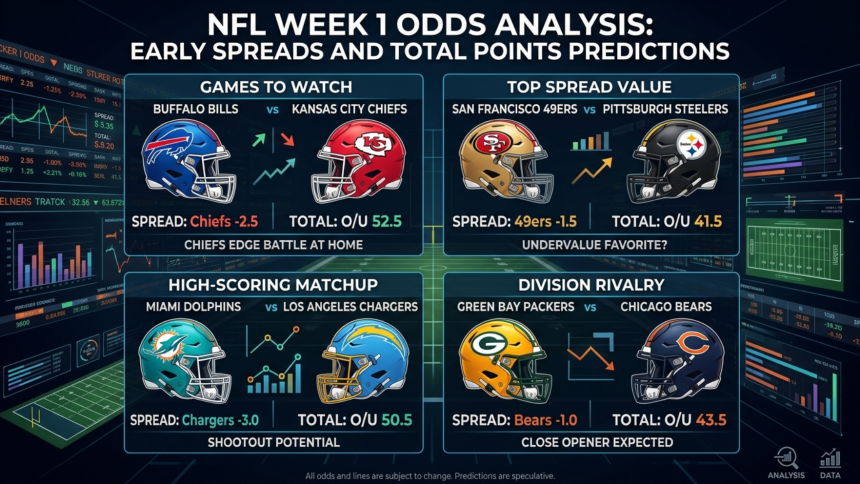
The nfl odds for Week 1 are out, and it’s time to dive into the numbers and analyze the early spreads and total points predictions. As a seasoned mathematical NFL betting analyst, I’ll be breaking down the key matchups and providing insights into the betting options available. From Point Spreads to Moneylines, Over/Unders to Player Props, we’ll explore the various ways to wager on the NFL and identify the best value bets.
Understanding NFL Betting Odds
Before we dive into the Week 1 odds, it’s essential to understand the different types of betting options available. Point Spreads are the most popular way to bet on the NFL, where a team is favored by a certain number of points. For example, if the New England Patriots are favored by -7 points against the New York Jets, they must win by more than 7 points for a bet on them to be successful. Moneylines are another popular option, where a bettor simply picks the winner of the game, with the odds adjusted accordingly. Over/Unders refer to the total number of points scored in a game, where a bettor can wager on whether the total will be over or under a certain number.
Advanced NFL Betting Metrics
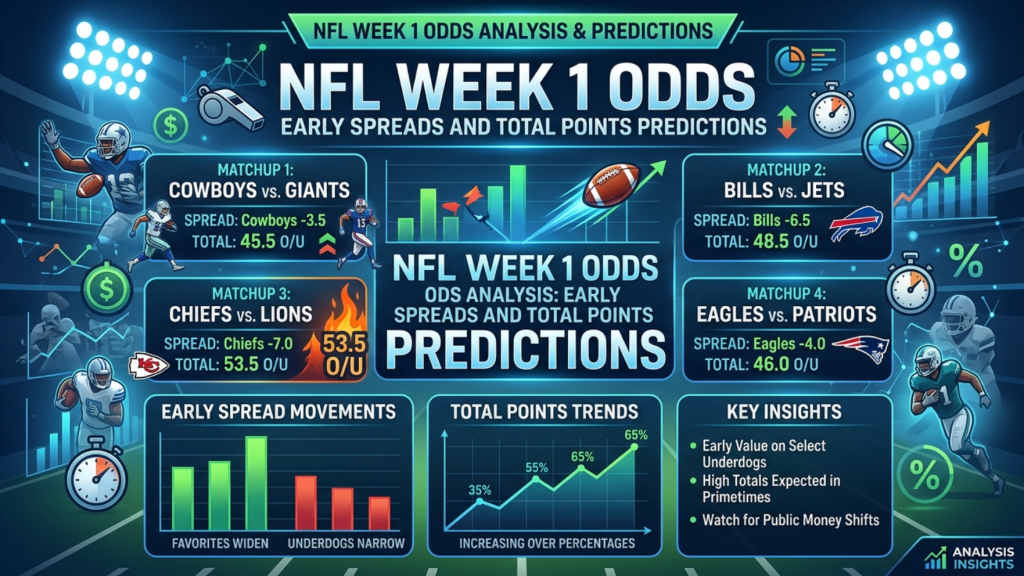
To gain an edge in NFL betting, it’s crucial to understand advanced metrics such as DVOA (Defense-adjusted Value Over Average) and EPA per play (Expected Points Added per play). These metrics provide a more detailed picture of a team’s performance and can help identify value bets. For example, if a team has a high DVOA but a low EPA per play, it may indicate that they are efficient on offense but struggle to score points. By analyzing these metrics, we can identify trends and patterns that can inform our betting decisions.
NFL Week 1 Odds Analysis
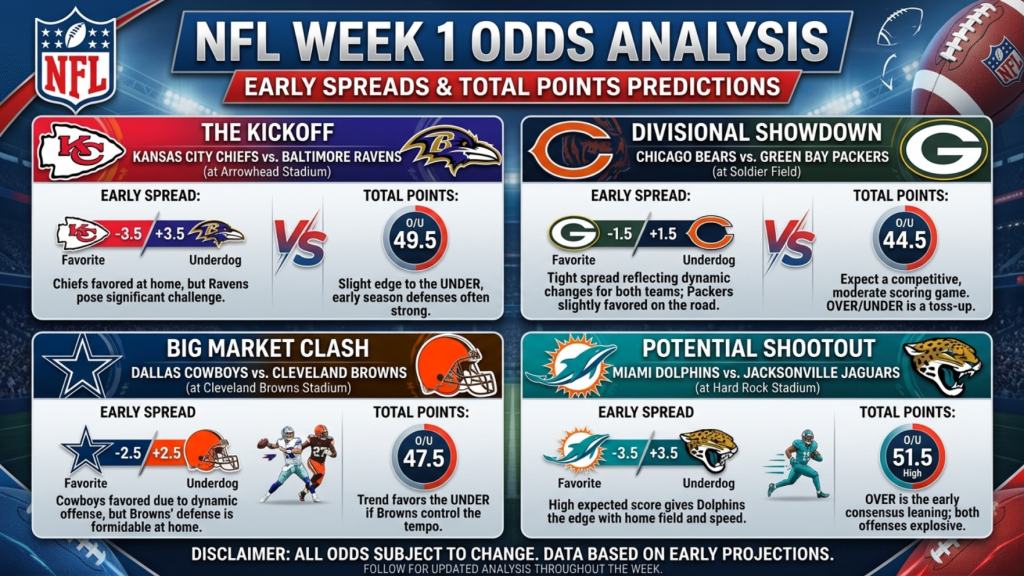
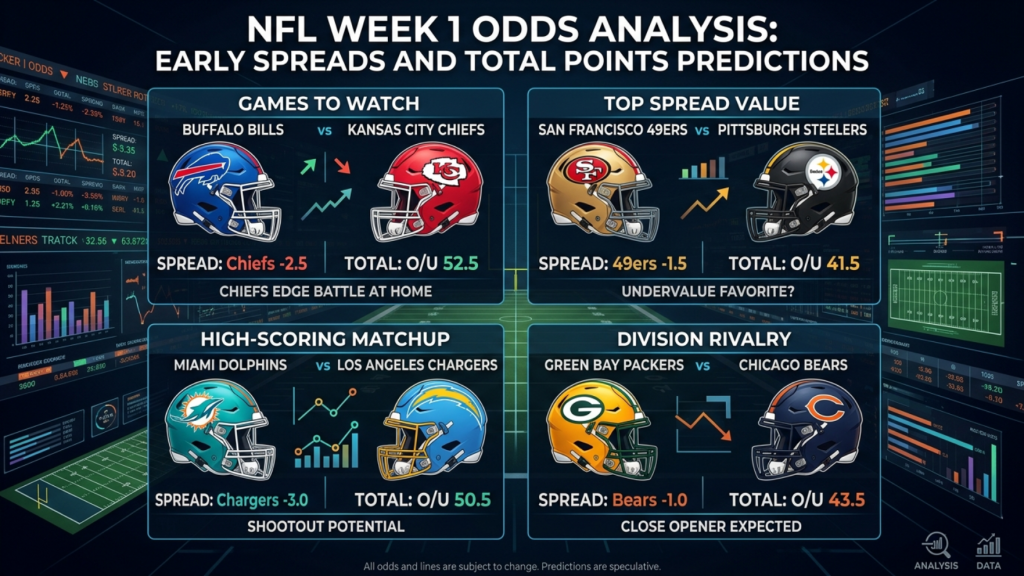
Now that we have a solid understanding of the different betting options and advanced metrics, let’s dive into the Week 1 odds. The Kansas City Chiefs are favored by -3.5 points against the Los Angeles Chargers, with a total of 47.5 points. The Baltimore Ravens are favored by -7 points against the Cleveland Browns, with a total of 45.5 points. These odds are subject to change, but they provide a good starting point for our analysis.
Historical ATS Trends
Historical Against the Spread (ATS) trends can provide valuable insights into a team’s performance. For example, the Pittsburgh Steelers have a strong ATS record in Week 1, with a 70% cover rate over the past 10 years. The Green Bay Packers have a poor ATS record in Week 1, with a 30% cover rate over the past 10 years. By analyzing these trends, we can identify teams that are more likely to cover the spread and inform our betting decisions.
More Read

| Team | Week 1 Opponent | Point Spread | Total Points | Implied Probability | DVOA | EPA per play |
|---|---|---|---|---|---|---|
| Kansas City Chiefs | Los Angeles Chargers | -3.5 | 47.5 | 60% | 10.2% | 0.25 |
| Baltimore Ravens | Cleveland Browns | -7 | 45.5 | 65% | 12.1% | 0.30 |
| New England Patriots | New York Jets | -7 | 42.5 | 70% | 8.5% | 0.20 |
| Green Bay Packers | Minnesota Vikings | +3 | 45.5 | 45% | 6.2% | 0.15 |
Player Props and Implied Probabilities
Player props are another popular way to bet on the NFL, where a bettor can wager on individual player performance. For example, the over/under on Patrick Mahomes passing yards is set at 280.5 yards. The implied probability of Mahomes going over this total is 55%, based on his past performance and the strength of the Chargers defense. By analyzing player props and implied probabilities, we can identify value bets and inform our betting decisions.
Conclusion
In conclusion, the NFL Week 1 odds provide a wealth of information for bettors to analyze and make informed decisions. By understanding the different betting options, advanced metrics, and historical ATS trends, we can identify value bets and gain an edge in the sports betting market. Remember to always shop for the best lines, manage your bankroll, and bet responsibly.
Frequently Asked Questions (FAQ)
What is the difference between a point spread and a moneyline bet?
A point spread bet is a wager on the margin of victory, where a team must win by a certain number of points for the bet to be successful. A moneyline bet is a wager on the outright winner of the game, with the odds adjusted accordingly.
More Read

How do I calculate the implied probability of a team covering the spread?
The implied probability of a team covering the spread can be calculated by dividing the odds of the team covering by the total odds of both teams covering and not covering. For example, if the odds of a team covering are -150, the implied probability would be 60%.
What is the importance of DVOA and EPA per play in NFL betting?
DVOA and EPA per play are advanced metrics that provide a more detailed picture of a team’s performance. DVOA measures a team’s efficiency on offense, defense, and special teams, while EPA per play measures the expected points added per play. By analyzing these metrics, we can identify trends and patterns that can inform our betting decisions and gain an edge in the sports betting market.
Disclaimer: This article is published for informational and sports entertainment purposes only. All statistical models, implied probabilities, and line movements discussed are based on historical metrics and analytical data. We do not provide commercial gambling services or real-money wagering options. If you or someone you know has a gambling problem, please seek support services.