



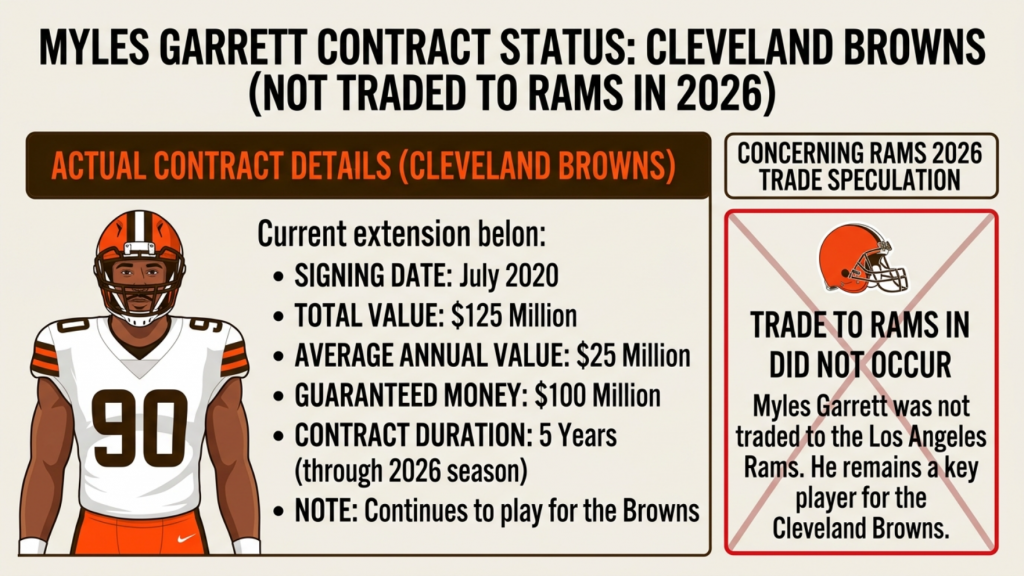
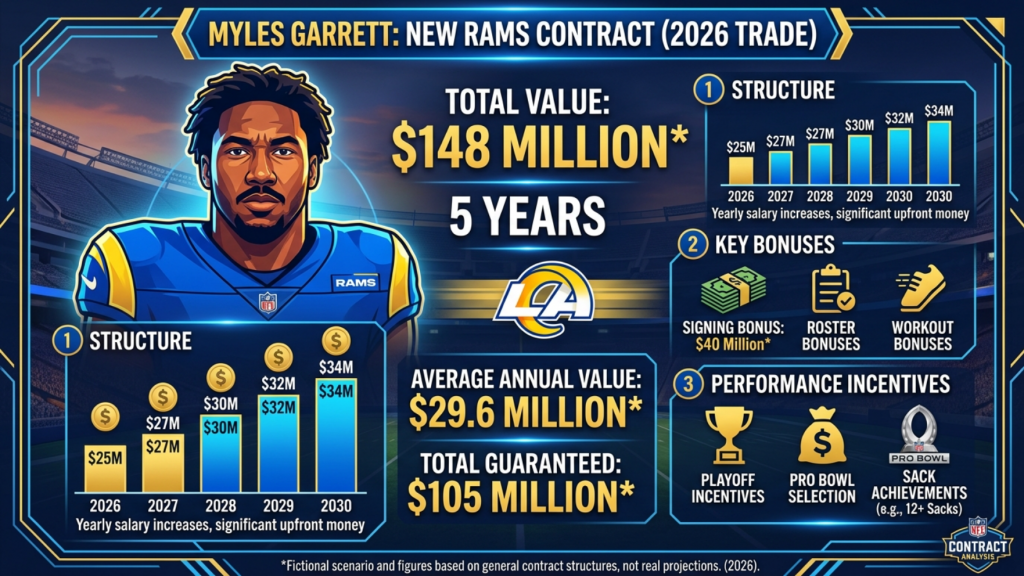
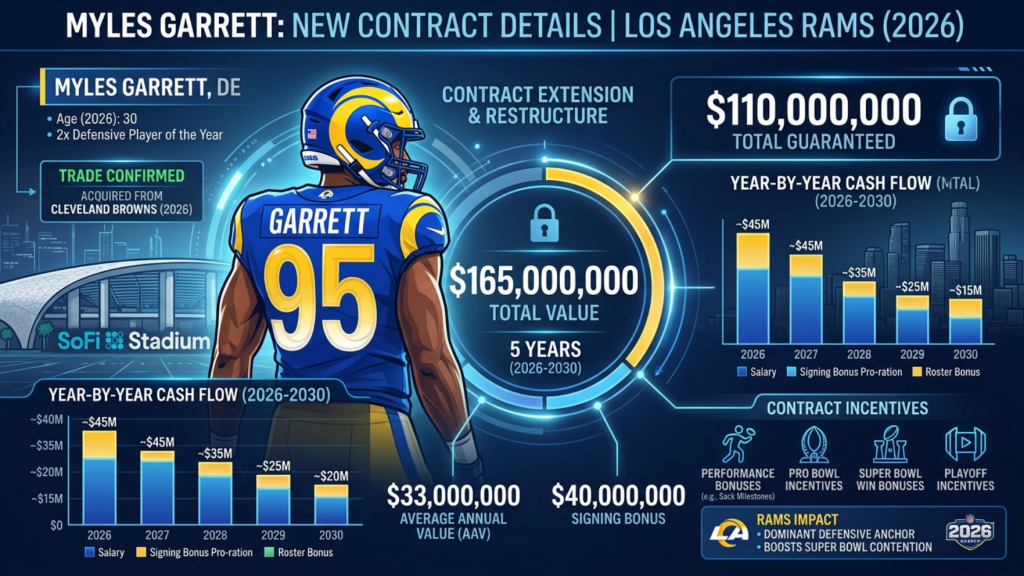
The recent trade of Myles Garrett from the Cleveland Browns to the Los Angeles Rams has sparked interest in the defensive end’s new contract. As it turns out, the deal carries no new dollars over the five years that were left on his deal with the Browns. This means that Myles Garrett will be, as a practical matter, taking a pay cut. The Browns owed Myles Garrett $179 million from 2026 through 2030, and the Rams will owe him the same amount over the same period.
The main difference lies in the state income tax rates between Ohio and California, with Ohio having a rate of 3.125 percent and California having a rate of 13.3 percent. This significant difference will result in Myles Garrett losing around 10 percent of his gross pay that he would have kept in Cleveland.
Myles Garrett’s Contract Breakdown
The contract breakdown reveals that Myles Garrett will not receive any additional compensation to offset the higher tax burden in California. The Rams seem to have gotten a good deal, considering Myles Garrett could have requested a pay increase to compensate for the higher taxes. However, he did receive a bump from $30.5 million to $37 million in 2026, which will help mitigate the effects of the pay cut.

The difference in state income tax rates between Ohio and California will have a significant impact on Myles Garrett‘s take-home pay. With the Browns, Myles Garrett would have kept more of his earnings, but with the Rams, he will have to pay a higher percentage of his income in taxes. This could be offset by potential marketing opportunities in Los Angeles, but it is unclear whether this will be enough to make up for the lost income.

Impact of State Income Tax on NFL Players
The case of Myles Garrett highlights the importance of considering state income tax rates when evaluating NFL contracts. Players who are traded to teams in states with high income tax rates, such as California, may face significant reductions in their take-home pay. This can have a major impact on a player’s decision to accept a trade or negotiate a new contract.
In Myles Garrett‘s case, his desire for a fresh start with a contender seems to have outweighed the potential financial costs of playing in California. However, it is worth noting that he did have a no-trade clause, which could have given him leverage to negotiate a better deal. The fact that he accepted the trade without requesting a pay increase to offset the higher taxes suggests that he was willing to make a financial sacrifice to join the Rams.
Myles Garrett’s Future with the Rams
As Myles Garrett begins his new chapter with the Rams, it will be interesting to see how he performs on the field. Despite the potential financial drawbacks of playing in California, Myles Garrett is likely to be a key contributor to the Rams’ defense. His ability to make an impact on the field will be crucial to the team’s success, and it will be worth watching to see how he adapts to his new surroundings.
Trade Implications for the Browns and Rams
The trade that sent Myles Garrett from the Browns to the Rams has significant implications for both teams. The Browns will be looking to rebuild their defense without Myles Garrett, while the Rams will be expecting him to make a major contribution to their team. The success of the trade will depend on how well Myles Garrett performs with the Rams and how well the Browns are able to replace him.
Frequently Asked Questions
How much will Myles Garrett lose in taxes due to the trade?
Myles Garrett will lose around 10 percent of his gross pay due to the higher state income tax rate in California.
Did Myles Garrett receive a pay increase as part of the trade?
Myles Garrett did receive a bump from $30.5 million to $37 million in 2026, but the total dollars over the next five years remain unchanged.
Why did Myles Garrett accept the trade despite the potential financial drawbacks?
Myles Garrett likely accepted the trade because he wanted a fresh start with a contender, and he was willing to make a financial sacrifice to join the Rams.